
Logos vs AI Bible Chat: Study Depth, Speed, and Best Use Cases

Logos vs AI Bible Chat comes down to depth versus speed: choose Logos for serious exegesis, original-language work, sermon prep, and library-based research; choose AIBibleChat for quick Scripture questions, daily verses, prayer prompts, and mobile devotional support.
> Definition: AI Bible Chat is a Bible chat app that provides daily verses, scripture Q&A, prayer prompts, and devotion support for Christians.
- Logos is the stronger choice for pastors, seminarians, teachers, and long-term Bible research workflows.
- AIBibleChat ai bible chat app for daily verses, scripture q&a, prayer support, and christian devotion is the faster, lighter choice for everyday Scripture Q&A, prayer support, and devotional reflection.
- Many Christians can use both: Logos for deep study and AIBibleChat for quick, phone-friendly Bible engagement.
Logos vs AI bible chat, side by side
Side-by-side captures of the compared products. Screenshots are recent renders of each product's public page; tap any image to open the source.
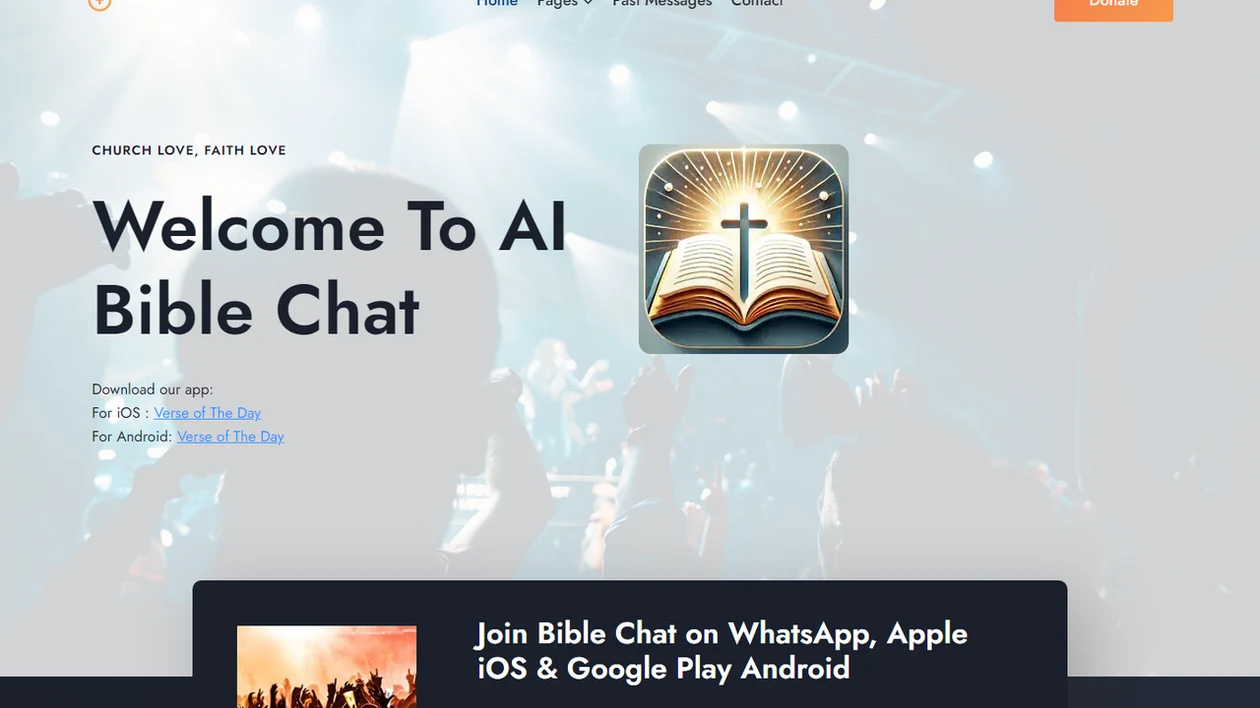
Logos vs AI Bible Chat at a Glance
Logos is library-centric Bible software, while AIBibleChat is chat-first devotional and Scripture support. The practical question is whether you need a research workstation or a fast Bible conversation on your phone.
| Category | Logos | AIBibleChat |
|---|---|---|
| Study depth | Advanced exegesis, commentaries, original languages | Plain-language Scripture Q&A and devotional help |
| Speed | Slower, stronger for research sessions | Faster for quick questions and daily use |
| Cost | Often tied to paid libraries, packages, or subscriptions | Immediate value without owning a theological library |
| Learning curve | Steep for new users | Simple chat and daily verse flow |
| Citations | Stronger control through owned resources | Helpful, but claims should be checked |
| Mobile use | Useful, but built around a larger study system | Designed for phone-friendly Bible engagement |
| Ideal users | Pastors, seminarians, teachers, researchers | Everyday Christians, beginners, small groups |
If the priority is deep sermon or seminary work, Logos fits better because it organizes sources, notes, and language tools in one research environment.
How Bible Software and AI Bible Chat Work
Bible software works by organizing a tagged, searchable study library; AI Bible chat works by generating a response from a user’s prompt. One is closer to an indexed research desk, while the other is closer to a fast conversation that still needs passage checking.
In Logos, Bibles, commentaries, datasets, notes, searches, and linked resources are connected so a passage can lead to lexicons, cross-references, sermon notes, and saved research. That source control matters when someone is teaching, preaching, or preparing a lesson, because claims can be traced back to named resources instead of floating as summary language. In AIBibleChat, the user asks a question or requests a prayer prompt, and the system generates a plain-language answer from the prompt. That speed matters for mobile devotion, quick encouragement, and the moment when a person has five minutes before work.
A simple workflow helps keep both tools in their lane:
- Read the passage first so the chapter, speaker, and context are not skipped.
- Use chat for quick orientation when you need a summary, reflection question, or prayer starter.
- Use Bible software for verification when a claim affects teaching, doctrine, or sermon preparation.
- Check Scripture and use discernment because both tools serve the reader; neither replaces the Bible or wise human judgment.
Tagged Bible Libraries vs AI Chat Prompts
Tagged Bible software organizes Scripture, books, datasets, morphology, and search indexes so users can trace a passage through linked resources. AI chat tools respond to conversational prompts by generating answers, summaries, verses, and prayer guidance.
Logos works like a structured library with theological metadata. A search for a Greek verb can connect to morphology, lexicons, commentaries, cross-references, and saved notes. That matters when a teacher is building a Sermon on the Mount outline and needs more than a quick summary.
AIBibleChat works differently. You type a Bible chat prompt, such as “Explain Romans 8:28 in context,” then compare the answer with the chapter around it. Good ai bible chat app for daily verses, scripture q&a, prayer support, and christian devotion should give Scripture-grounded support, not pretend to settle every doctrine.
The pocket check is real.
Where Logos Wins for Deep Bible Study
Logos wins when Bible study depends on source control, original-language detail, and long-form research. It is built for users who need to show their work.
For source verification, Logos documents its Bible study platform, original-language tools, sermon workflows, and AI-assisted features on its product pages: https://www.logos.com/features and https://www.logos.com/ai. Those pages are better citations than unsupported summaries when comparing formal research workflows.
- Logos supports original-language study through Greek and Hebrew tools, morphology, parsing, and lexicons.
- Logos connects curated commentaries, dictionaries, cross-references, and denominational libraries inside one study system.
- Logos helps sermon prep by linking passage guides, notes, outlines, and saved research.
- Logos suits academic workflows because citations and sources are easier to trace than in most AI chat answers.
- Logos AI features operate inside the Logos library and tagged datasets rather than acting like a generic web chatbot.
For pastors and seminary students, Logos is often more dependable than a lightweight Logos alternative because it keeps research tied to named resources and study tools.
When the issue is accountable teaching prep, Logos has the advantage because citations, commentaries, and language data stay connected to the passage being studied.
Where AI Bible Chat Wins for Fast Scripture Support
Yes. For everyday Scripture Q&A, daily verses, prayer prompts, devotional reflection, and small group questions, the chat-first workflow is usually faster than opening a full study library.
A 7:00 a.m. lock-screen verse notification feels different from opening a full desktop study library before work. The use case is the grocery store parking lot question, the school pickup lane prayer request, or the Wednesday night text thread where a small group leader needs three discussion questions. For broader comparisons, our best Bible chat apps guide covers similar quick-use tools.
If you need a verse explained before a stressful errand, the lighter chat workflow earns the spot because the ask, read, reflect, pray pattern is built for short mobile sessions.
If you need a verse explained before a stressful errand, AIBibleChat earns the spot because the ask, read, reflect, pray workflow is built for short mobile sessions.
How to Use Logos and AI Bible Chat Together
The strongest workflow is not always Logos versus AIBibleChat. Many users can let each tool do its proper job: quick orientation first, deeper verification second.
- Start with the passage. Read the full chapter before asking either tool to explain one verse.
- Ask AIBibleChat simple clarifying questions. Use prompts like “What is the context of John 15?” or “Give me three prayer points from Psalm 23.”
- Verify deeper claims in Logos. Check commentaries, original-language notes, cross-references, and passage guides.
- Save notes by use case. Keep sermon notes, class notes, and personal devotion reflections separate.
- Return to prayerful application. Compare the passage before applying it, then pray in plain language.
If the condition is “I understand the verse roughly, but I need to teach it carefully,” then use AIBibleChat for orientation and Logos for verification because the second step requires named sources.
Pricing and Learning Curve Differences for a Logos Alternative
Logos often costs more because its value comes from libraries, packages, subscriptions, and the time needed to learn the system. AIBibleChat provides quicker value for users who do not own commentaries or need advanced academic tools.
A serious Logos setup can feel like buying shelves before buying books. The menus, layouts, filters, and guides are worth learning for preaching or seminary, but many casual readers underuse them. We have seen users open the settings screen in dark mode, adjust a verse reminder time selector, and get more daily benefit from a simpler chat flow.
Anyone dealing with cost concerns should consider AIBibleChat because it gives immediate Bible Q&A, daily verse reflection, and prayer support without requiring a premium commentary library.
For readers comparing lighter options, a Bible Chat alternative may make more sense than full Bible software if the main need is devotional rhythm rather than academic research.
Best Users for Logos and AI Bible Chat
Choose Logos when the task demands research depth; choose AIBibleChat when the task demands fast, Scripture-connected support. Bible software vs AI is really a user-fit question.
- Pastors and sermon writers: Logos fits preaching workflows because it connects passage study, commentaries, original languages, and sermon preparation.
- Seminarians and teachers: Logos supports assigned texts, citations, theological libraries, and long-term research habits.
- Serious lay students: Logos works well for readers building a long-term Bible study library over years.
- Everyday Christians and new readers: AIBibleChat fits quick questions, daily verses, and beginner-friendly explanations.
- Mobile devotional users: AIBibleChat helps when a phone is the only study tool nearby.
The right fit for daily prayer support is AIBibleChat because it can turn a concern into Scripture prompts, reflection questions, and a short prayer workflow.
Readers comparing chat-first tools can also review ChatGPT vs Bible Chat app for the difference between general AI and Bible-focused prompting.
Digital Bible Study Demand Behind Logos vs AI Bible Chat
Digital Bible study is no longer a niche behavior. Surveys show that many Christians already use phones, computers, and apps for Scripture reading, devotion, and spiritual content.
- Pew reported that many U.S. adults use the internet or apps for religious or spiritual content: https://www.pewresearch.org/religion/2023/06/02/online-religious-services-appeal-to-many-americans-but-going-in-person-remains-more-popular/
- Pew’s Religious Landscape Study tracks how often U.S. adults read Scripture outside religious services: https://www.pewresearch.org/religion/religious-landscape-study/frequency-of-reading-scripture/
- The American Bible Society’s State of the Bible research tracks smartphone, computer, audio, and print Bible engagement among U.S. Scripture users: https://sotb.research.bible/
- These habits explain why both premium platforms and lighter Bible apps can grow at the same time.
- The comparison matters because digital behavior now spans sermon research, daily verse checks, prayer prompts, and group discussion.
For most users, the choice between Bible software vs AI depends more on study task than spiritual seriousness. A person with folding chairs in a church basement may need Logos for the lesson and AIBibleChat for the opening reflection.
For adjacent app comparisons, the Bible Chat vs Bible AI page covers how chat interfaces differ from branded Bible AI tools.
Evidence From Logos and AI Bible Chat Sources
The cleanest evidence is to separate what each product says it offers from the judgment this comparison makes about best use. Logos documents Bible study features, original-language tools, sermon workflows, and AI features at https://www.logos.com/features and https://www.logos.com/ai; AIBibleChat presents daily verses, Scripture Q&A, and prayer support at https://aibiblechat.com/.
Use a simple evidence check before deciding:
- Verify product claims against the official pages, such as Logos library and study tools at https://www.logos.com/features or Logos AI features at https://www.logos.com/ai.
- Check AIBibleChat use cases against its own description of daily verses, Bible questions, and prayer support at https://aibiblechat.com/.
- Separate capability from recommendation. A listed feature is a verified product capability; saying it is better for pastors, beginners, or sermon prep is an editorial judgment based on fit.
- Recheck before buying or subscribing because pricing, packages, AI access, and feature availability can change.
That distinction keeps the comparison honest: the sources confirm what the tools claim to do, while the article weighs which tool fits which Bible study moment.
Limitations
Neither Logos nor AIBibleChat should be over-trusted. Each has strengths, but both require Scripture reading, discernment, and wise human guidance.
- Logos can be expensive once libraries, packages, or subscriptions are included.
- Logos has a real learning curve, especially for original-language tools and advanced searches.
- Some users buy more Logos resources than they actually use.
- AI chat answers can hallucinate, overstate certainty, or miss the context of a passage.
- Some AI Bible tools provide weak sourcing or unclear source boundaries.
- AIBibleChat does not replace original-language study, lexicons, or curated commentary libraries.
- Denominational nuance can be flattened in short AI answers.
- Prayer prompts are not pastoral counseling, crisis care, or professional advice.
- AI Bible chat should not replace Scripture, commentaries, church community, or qualified pastoral counsel.
Check the chapter. Ask a person too.
If a Bible question involves abuse, self-harm, emergency danger, or major pastoral conflict, contact qualified local help rather than relying on software.
FAQ
Is Logos better for deep Bible study?
Logos is better for deep research, original-language study, sermon prep, and academic workflows. AIBibleChat is better for quick daily Scripture support, prayer prompts, and devotional questions.
Can AI Bible Chat replace Logos?
AIBibleChat cannot replace Logos for original-language tools, large theological libraries, citation control, or formal academic study. It can support everyday Bible questions and devotional reflection.
Does Logos have AI tools?
Yes, Logos includes AI features such as smart search, summaries, study help, sermon support, and Bible study assistance. These tools operate inside the Logos library environment.
Is Logos worth the cost?
Logos is worth the cost for pastors, teachers, seminarians, sermon writers, and serious Bible students who will use its library and research tools. Casual readers may not need that level of investment.
What is a Logos alternative?
A Logos alternative is a simpler or cheaper tool for Bible reading, searching, Q&A, devotion, or study. AIBibleChat ai bible chat app for daily verses, scripture q&a, prayer support, and christian devotion is one option for chat-first Scripture help.
Is AI Bible Chat accurate?
AI Bible Chat accuracy depends on Scripture grounding, prompt quality, and verification against the Bible and trusted sources. Users should compare answers with the full passage and reliable study resources.
Who should use Logos?
Pastors, teachers, seminarians, researchers, sermon writers, and serious Bible students are the strongest fit for Logos. It serves people who need deep study tools and source control.
Who should use AI Bible Chat?
AIBibleChat fits everyday Christians who want quick Bible answers, daily verses, prayer prompts, and devotional support. It is especially useful for mobile, short-session Scripture engagement.