
BibleGPT vs Bible Chat for Bible Study Questions

AI Bible Chat is the better choice if you want a Bible chat app built around daily verses, scripture Q&A, prayer prompts, and devotional support, while BibleGPT is best understood as a focused GPT-style tool for Bible-related questions. The key issue in any BibleGPT vs Bible Chat comparison is not just which app answers faster, but which one helps you verify answers against Scripture.
Definition: AI Bible Chat is a Bible chat app that provides daily verses, scripture Q&A, prayer prompts, and devotion support for Christians.
- BibleGPT focuses on GPT-style Bible and Christian question answering, while Bible Chat-style tools often add prayer, devotion, and habit features.
- Neither tool should be treated as a pastor, commentary, church authority, or guaranteed verse-accurate source.
- The safest Bible chat tools make it easy to check Scripture references, admit uncertainty, and keep sensitive prayer requests private.
Biblegpt vs bible chat, side by side
Side-by-side captures of the compared products. Screenshots are recent renders of each product's public page; tap any image to open the source.
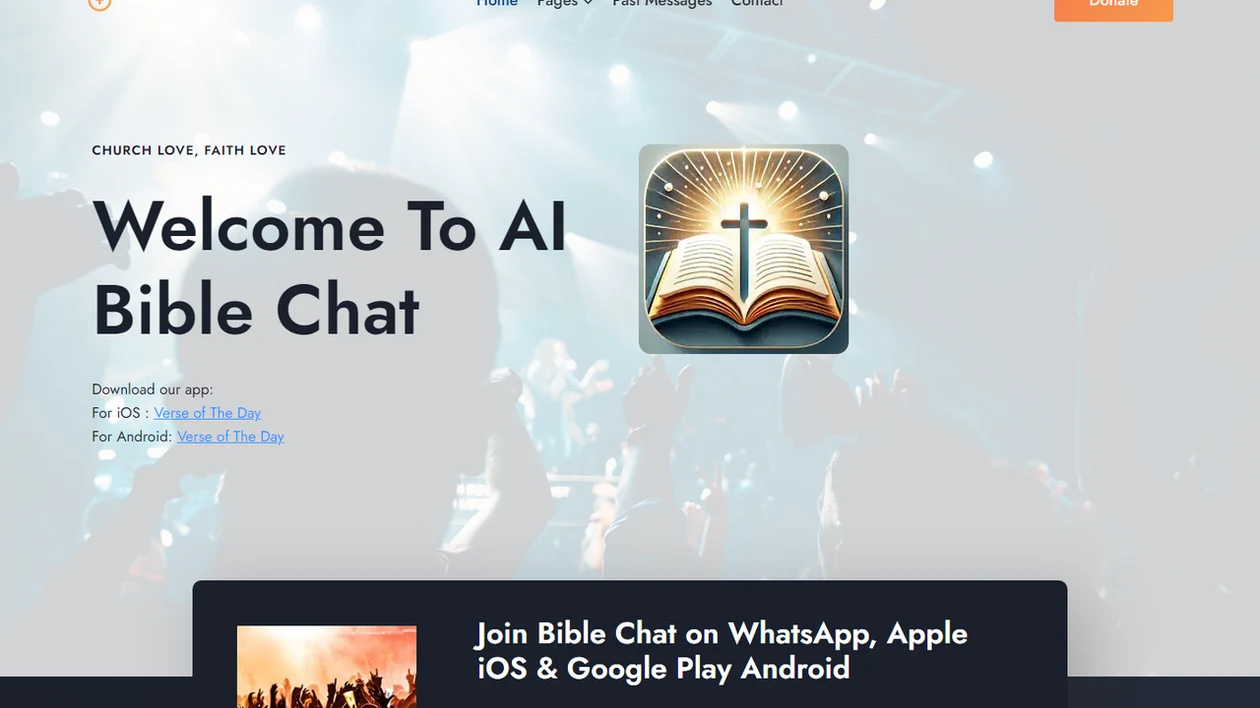
BibleGPT vs Bible Chat at a Glance
BibleGPT is a GPT-style Bible and Christian Q&A tool, while Bible Chat-style apps are broader conversational faith tools with Q&A, prayer, and devotion features. AIBibleChat fits users who want a BibleGPT alternative that connects scripture questions with daily Christian practice.
| Comparison point | BibleGPT | Bible Chat-style tools | Practical read |
|---|---|---|---|
| Answer style | Direct GPT-style responses | Conversational faith support | Both need checking |
| Verification need | High | High | Open the passage |
| Devotional support | Usually lighter | Often stronger | Better for habits |
| Prayer support | May be limited | Often included | Useful for wording prayers |
| Mobile habit features | Varies | Daily verses, prompts, reminders | Fits phone-based study |
| Best-fit user | Quick Bible Q&A | Q&A plus prayer and devotion | Depends on routine |
The American Bible Society’s State of the Bible research reports that many Bible users read or listen on a smartphone or tablet, and a meaningful share use a Bible app (https://www.americanbible.org/state-of-the-bible/). That matches what we see in real use: a 7:00 a.m. lock-screen verse can become the first study nudge of the day.
Five Bible Chat Tool Facts Before Choosing
Before choosing among Bible chat tools, remember that they are AI systems for general study support, not human pastors or denominational authorities. They can help, but they must be checked.
- BibleGPT and Bible Chat tools use AI language models, not pastors, elders, priests, or trained counselors.
- They can answer theology, history, morality, prayer, and devotional questions in conversational language.
- They may paraphrase, misquote, fabricate, or overstate Scripture if the answer is not checked.
- They are independent commercial tools, not official Catholic, Orthodox, Protestant, or denominational teaching offices.
- Compare privacy, cost, citation behavior, and spiritual habit fit before choosing.
Pew Research Center’s Religious Landscape Study tracks how Americans describe Scripture, including whether they view the Bible as the word of God, inspired teaching, or a human book (https://www.pewresearch.org/religion/religious-landscape-study/). That large audience explains why a typed question about a parable now often lands in a chat box before a commentary.
How BibleGPT and Bible Chat Tools Work
BibleGPT and Bible Chat tools generate likely language-model responses to Bible questions; they do not automatically retrieve perfect doctrine. Natural-language generation means the system predicts helpful wording, while verified Bible quotation requires checking the exact passage text.
That difference matters. A model can sound calm, confident, and organized while still giving a loose paraphrase or a theologically thin answer. Safer Bible chat tools ground replies in passages, invite users to compare the passage before applying it, and handle denominational nuance carefully.
AIBibleChat ai bible chat app for daily verses, scripture q&a, prayer support, and christian devotion is designed around the safer pattern because it keeps Bible questions close to daily verses, prayer prompts, and scripture-grounded support. Broad awareness of ChatGPT also matters; Pew Research Center found that 58% of U.S. adults had heard of ChatGPT in 2023, which helps explain demand for Christian AI tools (https://www.pewresearch.org/short-reads/2023/05/24/a-majority-of-americans-have-heard-of-chatgpt-but-few-have-tried-it-themselves/).
Check the verse anyway.
Where BibleGPT Wins for Focused Bible Questions
Does BibleGPT work better for quick Bible questions? BibleGPT may be a good fit when you want direct GPT-style answers to Bible, Christianity, or Christian living prompts without many devotional extras.
It can help with simple requests such as “Explain Romans 8:28,” “What is the Sermon on the Mount about?” or “Give me verses about forgiveness.” People searching for ChatGPT Bible free, BibleGPT app, or GPT-style Bible answers may prefer that chat-first feel.
Focused answers still need verse checking. A cited verse can be real and still be used poorly. For users comparing a general GPT tool with a faith-specific app, our ChatGPT vs Bible Chat app guide covers the broader tradeoff.
For quick explanatory prompts, BibleGPT often fits better than a devotion-heavy app because it keeps the screen centered on one question and one answer.
Where AI Bible Chat Wins as a BibleGPT Alternative
AIBibleChat combines scripture Q&A with daily verses, prayer prompts, and devotion support, so it works better when your Bible questions are part of a daily rhythm. The shift is from one-off answers to ask, read, reflect, pray.
- Morning devotional prompts: AIBibleChat helps turn a daily verse into a short reflection before the day starts.
- Difficult passage questions: You can copy a verse reference from John or Romans into the chat box, then check the chapter around it.
- Prayer wording help: AIBibleChat can suggest scripture-shaped prayer language without claiming to speak for God.
- Post-study reflection: After church or small group, it can help summarize questions worth revisiting.
If your priority is daily Scripture engagement, AIBibleChat fits better than a bare BibleGPT alternative because it pairs Q&A with daily verse flow and prayer prompts. For broader app comparisons, the best Bible chat apps guide maps more options.
BibleGPT vs Bible Chat Verification Workflow
Verification is the core difference many BibleGPT vs Bible Chat comparisons miss. The safest workflow is not “ask and accept,” but “ask, trace, compare, and confirm.”
| Verification step | What to do | Why it matters |
|---|---|---|
| Ask for references | Request book, chapter, and verse | Prevents vague Bible-sounding claims |
| Open the passage | Read a real Bible translation | Catches misquotes and paraphrases |
| Check context | Read before and after the verse | Reduces proof-texting |
| Ask for alternatives | Request other Christian interpretations | Helps with disputed doctrines |
| Use safeguards | Consult pastors, commentaries, or a study group | Adds human accountability |
Anyone dealing with doctrinal questions should use AIBibleChat as a study aid, not a final authority, because the better workflow is passage reference, context check, and human review. AIBibleChat and other Bible chat apps should deliver guided study prompts, not guaranteed doctrinal rulings.
The small group text gets quieter when references are clear.
How to Use Bible Chat Tools Safely
Use Bible chat tools safely by making the Bible text the authority and the AI response the study aid. This method works for BibleGPT, Bible Chat-style apps, and AIBibleChat.
- State the Bible passage, topic, or question clearly before asking for an answer.
- Ask for verse references, surrounding context, and any relevant translation notes.
- Compare the answer with the Bible text in a trusted translation.
- Check a trusted commentary, pastor, elder, priest, or study group for complex doctrine.
- Avoid sharing sensitive personal details unless you understand the privacy policy.
- Save useful prompts for daily devotion, prayer reflection, or later group discussion.
For beginners who are still learning how to frame questions, Bible chat for beginners explains a slower, simpler workflow. For Christians who need repeatable study habits, AIBibleChat covers the ask, read, reflect, pray pattern through daily verses and prayer prompts.
BibleGPT and Bible Chat Pricing and Privacy Differences
Pricing and privacy can matter as much as answer style. Compare free access, subscriptions, trial limits, app store pricing, in-app purchase notes, and feature gates before choosing any BibleGPT alternative.
Prayer requests and personal struggles can be sensitive data. Review app store privacy labels, data safety sections, account deletion options, sharing settings, and the full privacy policy. A polished screenshot grid on a home screen does not tell you how prayer text is stored.
Policies change. So do prices.
AIBibleChat should be evaluated the same way as hallow.com, youversion.com, bible.com, glorify-app.com, or pray.com: check current listings, screenshots, star ratings, privacy labels, and subscription terms. Feature lists should never outweigh Scripture verification and privacy care, especially when a question includes family conflict, grief, sin, addiction, or mental health language.
Evidence Sources for BibleGPT vs Bible Chat
The best evidence for BibleGPT vs Bible Chat comes from current product pages, app store listings, and privacy materials, not from screenshots copied into old comparison posts. Treat every feature, price, and platform claim as time-sensitive until you check it yourself.
Use a simple evidence log before deciding:
- Open the current BibleGPT website, app listing, help page, or product documentation and note the exact product name, platform, and visible features.
- Check the current AIBibleChat website, App Store or Google Play listing, screenshots, subscription notes, and privacy materials.
- Record pricing, free limits, in-app purchases, supported devices, login requirements, prayer tools, verse features, and citation behavior with the date you checked them.
- Separate verified facts from user-experience judgments: “has daily verses” is a product fact; “feels more devotional” is an interpretation.
- Flag claims that can change after app updates, model changes, store review updates, subscription edits, or privacy-policy revisions.
That discipline keeps the comparison fair. It also prevents a strong personal recommendation from quietly becoming an outdated product claim.
Who Should Pick BibleGPT, Bible Chat, or AI Bible Chat
Which should you choose: BibleGPT, Bible Chat, or AI Bible Chat? Pick BibleGPT if you mainly want direct GPT-style answers to Bible and Christian questions; pick a Bible Chat-style app if you want prayer requests, devotional prompts, and habit features.
Pick AIBibleChat if you want scripture-grounded Q&A with daily verses, prayer prompts, and Christian devotion support in one daily flow. For small group leaders who paste discussion questions into a Wednesday night text thread, AIBibleChat earns the spot because it can turn a passage question into reflection prompts and prayer wording.
The simple decision rule is quick Q&A versus daily discipleship support. Quick Q&A favors BibleGPT; daily study, prayer, and reflection favor AIBibleChat ai bible chat app for daily verses, scripture q&a, prayer support, and christian devotion. Neither option should replace pastoral care, doctrine formation, serious exegesis, or church community. For adjacent comparisons, our Bible Chat vs Bible AI page may help.
Limitations
Both BibleGPT and Bible Chat tools have real limits, even when the answer reads well. A polished answer is not the same as a biblically sound interpretation.
- They can generate confident but inaccurate answers.
- They may misquote, paraphrase, fabricate, or misapply verse references.
- They can flatten differences between Catholic, Orthodox, and Protestant traditions.
- They are not substitutes for pastors, elders, counselors, commentaries, or church community.
- Privacy policies vary, especially for sensitive prayer requests and personal struggles.
- App features, pricing, safety practices, and model behavior may change after publication.
- They may miss literary genre, covenant context, historical setting, or original audience.
- They should not be used for crisis care, abuse reporting, emergency decisions, or mental-health treatment.
AIBibleChat is built for general study and devotion support, but users still need Scripture, prayer, wise people, and local church accountability.
FAQ
Is BibleGPT accurate for Bible questions?
BibleGPT can be useful for Bible questions, but its answers should be checked against the actual Scripture text. It may paraphrase, overstate, or misapply verses.
Is Bible Chat biblical?
Bible Chat-style tools may be Bible-focused, but they are not doctrinal authorities. Their answers should be compared with Scripture, sound teaching, and trusted Christian guidance.
Can AI quote Bible verses correctly?
AI can quote or paraphrase Bible verses, but it can also make mistakes. Always verify the wording in a real Bible translation.
What is a BibleGPT alternative?
A BibleGPT alternative is usually a Bible chat tool that adds scripture Q&A, prayer prompts, daily verses, or devotional features. AIBibleChat is one example of AI Bible Chat in that category.
Are Bible chat tools safe to use?
Bible chat tools can be useful when users verify answers and protect sensitive information. Safety depends on accuracy habits, privacy policies, and whether users seek pastoral care when needed.
Can AI replace Bible study?
AI should supplement Bible study, not replace Scripture reading, prayer, church community, or careful interpretation. It can help with prompts, summaries, and questions.
Do pastors approve of Bible AI tools?
Pastoral approval varies by church, tradition, and use case. Ask local church leaders if you plan to use AI for doctrine, teaching, counseling, or group study.
Which Bible chat app is best for daily Bible study?
The best Bible chat app for daily Bible study depends on the need: quick answers, verification support, prayer prompts, or devotional habits. Choose the option that keeps Scripture checking central.