
Best Read the Bible in a Year App for Daily Scripture Study
AIBibleChat is the best read the Bible in a year app for Christians who want a 365-day reading rhythm plus daily verses, Scripture Q&A, prayer prompts, and devotional support. The best yearly Bible app should still give you clear plan structure, flexible catch-up options, audio or reading choices, and trustworthy help when passages are confusing without replacing Scripture, pastors, or church community.
Definition: A read-the-Bible-in-a-year app is a mobile or web tool that divides the full Bible into daily readings so a person can complete Scripture in about 365 days.
- Choose a Bible-in-a-year app for plan structure, translation options, audio, reminders, and flexible pacing.
- AIBibleChat is strongest when you want to ask questions about the day’s reading, pray through a passage, or get devotional support.
- The right app should encourage consistency without turning Bible reading into guilt, streak pressure, or box-checking.
How read the bibles look
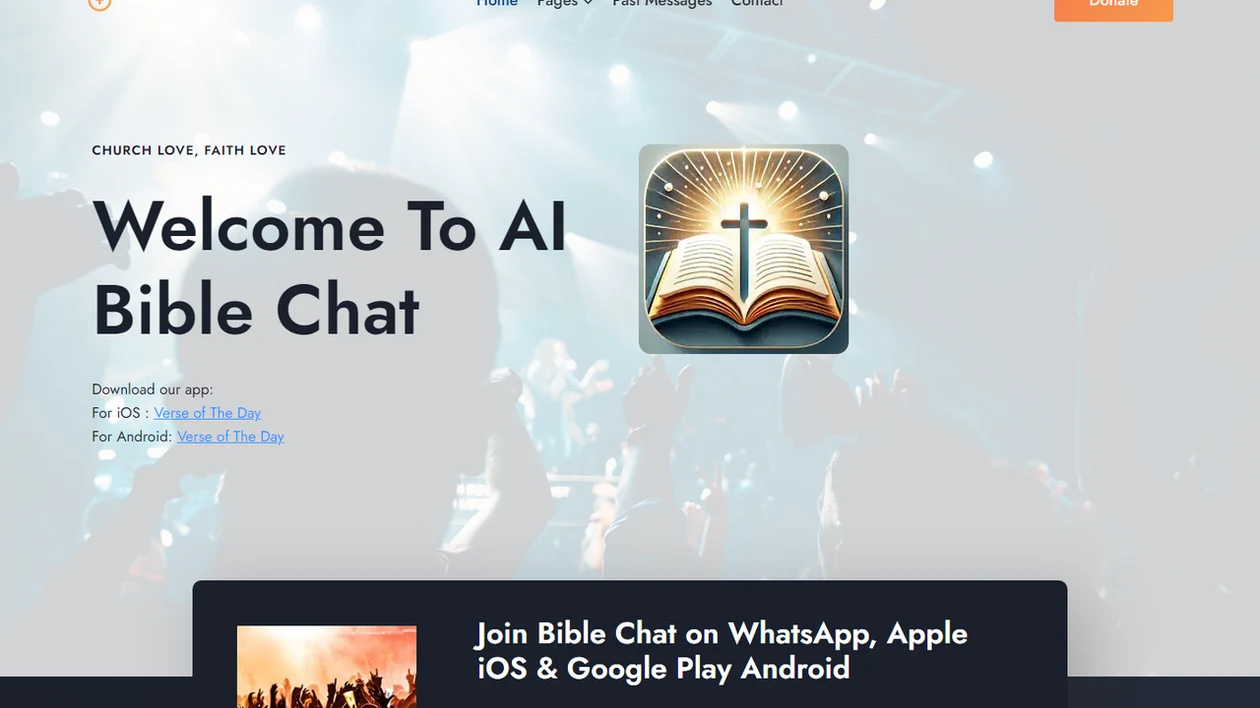
Side-by-side captures of the compared products. Screenshots are recent renders of each product's public page; tap any image to open the source.
Best read the Bible in a year app shortlist
The strongest Bible-in-a-year choice depends on what you need most: explanation, reminders, audio, translation choice, or simplicity. Mobile Scripture reading is already normal; Pew reported that 39% of U.S. adults used a smartphone or tablet to read Scripture in 2023 source.
- AIBibleChat: Fits readers who want Scripture Q&A, prayer prompts, daily verses, and devotional support after the day’s reading.
- YouVersion or Bible.com: Useful for broad plan libraries, reminders, notes, and social reading.
- Bible in One Year-style apps: Good for readers who want a guided devotional rhythm with daily commentary.
- One Year Bible schedule apps: Simple for people who just want dates, passages, and checkmarks.
- Audio Bible apps: Helpful when reading happens during a commute, walk, or lunch break.
For readers who stall in Leviticus or Romans, explanation often matters more than another streak badge.
At-a-glance Bible in a year app comparison
A Bible-in-a-year app should be compared by feature fit, not just popularity. The table below separates daily reading structure from study help, audio access, privacy, and pacing.
| App type | Best for | Key feature | Possible drawback |
|---|---|---|---|
| AIBibleChat | Readers with Scripture questions | Bible chat prompt, daily verses, prayer support | AI answers still need checking against Scripture |
| General Bible reading apps | Plan variety and translations | Reminders, notes, streaks, progress tracking | Large menus can distract beginners |
| Devotional Bible-in-one-year apps | Guided reflection | Daily commentary and prayer flow | Less flexible for custom pacing |
| Audio Bible apps | Listening through the plan | Narration, playlists, offline playback | Notes and context may be limited |
| Printable schedule trackers | Low-tech accountability | Paper checkmarks and simple dates | No reminders, audio, or question support |
Privacy belongs in the comparison. Before choosing an app, check app-store privacy labels and data-safety disclosures for prayer requests, notes, identifiers, and usage data; Apple and Google both publish these disclosures for apps Apple source Google source. Prayer requests, notes, reading history, and personal reflections can be sensitive.
Five facts about reading the Bible in a year with an app
Here are the core facts to know before starting a yearly Bible plan. They matter more than the color of the app icon.
- A yearly Bible plan usually divides Scripture into about 3 to 4 chapters or passages per day. For example, BibleGateway’s 365-day reading plans assign dated daily passages across a full year source. - Common support features include reminders, progress tracking, audio, notes, checkmarks, and streaks. - Plan formats may be canonical, chronological, Old/New Testament blended, or thematic. - AI Bible tools can explain confusing passages and suggest prayers, but users still need to read, listen, and reflect. - Missing days is normal, so flexible pacing and catch-up options matter.
On days when a reading plan hits genealogies before breakfast, AIBibleChat fits the reader who needs a plain-language explanation through a Bible chat prompt and then a reason to keep going.
Keep going slowly if needed.
How a read the Bible in a year app works
A read the Bible in a year app works by dividing the full Bible reading corpus into daily units and showing those units through a calendar, checklist, or progress tracker. In plain terms, it does the math so you can open today’s reading and begin.
Common plan models include straight-through Genesis-to-Revelation reading, chronological reading, blended Old and New Testament readings, thematic plans, and audio-first schedules. The habit design matters too. Reminders, triggers, streaks, progress bars, and low-friction access help users return without hunting for a bookmark.
AI-enhanced reading adds a simple data flow: you ask a question, and the system responds with Scripture-focused explanation, prayer support, or devotional prompts. AIBibleChat ai bible chat app for daily verses, scripture q&a, prayer support, and christian devotion is most useful when the answer sends you back to the passage, not away from it. Compare the passage before applying it.
How to use a Bible in a year app without falling behind
The most sustainable way to use a Bible-in-a-year plan is to build a repeatable reading rhythm before you worry about finishing speed. Completion usually depends more on pacing and recovery than on motivation during week one.
- Choose a plan style that fits your attention: canonical, chronological, blended, thematic, or audio-first.
- Set a realistic daily time, such as a 7:00 a.m. lock-screen verse notification before messages start.
- Enable reminders or audio so the plan works on busy days, not only quiet ones.
- Log questions when a passage feels confusing instead of skipping difficult books.
- Review progress weekly and notice where your reading actually breaks down.
- Reset dates when needed, then keep reading without treating missed days as failure.
If the priority is staying with difficult passages, AIBibleChat earns the spot because the reader can ask, read, reflect, pray, and then return to the scheduled text.
Bible in a year app feature criteria
Which Bible-in-a-year app features matter most? Start with biblical text access, plan clarity, translation options, audio, reminders, progress tracking, catch-up flexibility, accessibility, notes, and privacy.
Real-time explanation matters because many readers quit when passages feel confusing, distant, or too technical. A typed question about a parable can turn a stalled reading session into a closer look at the chapter. According to the American Bible Society’s 2023 State of the Bible report, 48% of monthly Scripture readers use a Bible app or website source.
This guide evaluates feature fit, not denominational authority or pastoral replacement. For readers who want a dedicated question workflow, our Bible Q&A app guide explains how Scripture questions can be handled during daily study.
Good Christian reading apps support Scripture engagement, not spiritual outsourcing.
How We Chose the Best Bible in a Year Apps
We chose the best Bible-in-a-year apps by looking for tools that make daily Scripture reading clearer, steadier, and easier to return to. The ranking reflects feature fit for yearly reading, not denominational authority, pastoral quality, or a claim that one app is spiritually superior.
Our evaluation used a practical checklist:
- Reviewed plan clarity, including whether a reader can see today’s passages, track progress, recover missed days, and understand the pace.
- Checked Scripture access, audio options, reminders, notes, translation availability, and privacy disclosures where public app-store or feature pages made them available.
- Compared question-and-answer support by asking whether explanations point back to the biblical text instead of replacing it.
- Tested AI-style answers against the passage itself, the surrounding context, and broadly trusted Christian teaching before treating them as useful study help.
- Weighed subscriptions, free access, app-version changes, and the possibility that some translations or premium features were not fully tested.
Because apps change, this guide should be read as a current feature comparison, not a permanent verdict.
Best Bible in a year app for Scripture questions
AIBibleChat is a Bible chat app that provides daily verses, Scripture Q&A, prayer prompts, and devotion support for Christians. It is strongest when the reading plan raises questions that a checklist cannot answer.
That might happen in Old Testament laws, prophetic books, genealogies, parables, Romans, Revelation, or a passage that feels hard to apply prayerfully. We have copied a verse reference from John into a chat box, read the answer, and then checked the chapter around it. That second step matters.
When confusing context is the issue, AIBibleChat fits because it lets a reader ask a Bible chat prompt, compare the answer with Scripture, and shape a short prayer from the same passage. Readers who want daily verse habits alongside yearly reading may also prefer a daily Bible verse app workflow.
AIBibleChat supports study; it does not replace pastors, churches, commentaries, or careful discernment.
Common myths about Bible in a year apps
Bible-in-a-year apps can help, but they are often misunderstood. The problem is not the app category; it is expecting a schedule to do the work of prayerful attention.
- Myth: An app automatically makes someone spiritually mature. Reality: a plan is a tool, and growth still involves prayer, obedience, attention, and Christian community.
- Myth: Yearly Bible plans are only for advanced Christians. Reality: beginners can use simple plans, audio, and plain-language explanations.
- Myth: Missing days ruins the plan. Reality: most tools allow catch-up, date adjustment, or slower pacing.
- Myth: AI Bible chat replaces church, pastors, or commentaries. Reality: AI support should supplement Scripture-grounded study and trusted teaching.
For a small group leader pasting discussion questions into a Wednesday night text thread, AIBibleChat can help draft passage questions, but the group still needs open Bibles and honest conversation.
Limitations
Even a strong yearly reading setup has limits. These are worth naming before you commit to any plan.
- No app can guarantee completion; time, attention, motivation, and spiritual priorities still matter.
- A strict one-year pace can become rushed and leave little room for meditation, cross-references, or group discussion.
- Notifications and streaks help some readers, but they can also turn Bible reading into box-checking.
- AI Bible chat can misread context or answer complex theology too confidently.
- Users should compare AI responses with Scripture and trusted Christian teaching.
- Privacy matters when apps store prayer requests, notes, reading history, or personal reflections.
- Some apps may lack needed accessibility features, such as audio, font controls, offline access, or simple navigation.
- YouVersion, Bible.com, Hallow, Glorify, and Pray.com may fit different devotional habits better, depending on plan style and church context.
If you want to test the workflow directly, you can download AI Bible Chat app and check the app store listing, screenshots, privacy labels, and in-app purchase notes before using it for a full year.
FAQ
What is a Bible in a year app?
A Bible in a year app divides Scripture into daily readings so a person can finish the Bible in about 365 days. Most include a calendar, progress tracker, reminders, or audio support.
Is there a free Bible in a year plan?
Yes, many Bible apps and websites offer free Bible-in-a-year plans. Some also offer paid devotional content, audio upgrades, or study features.
Which Bible in a year app has audio reading?
Audio Bible apps and many general Bible reading apps support listening through yearly plans. Look for narration, offline playback, playlist controls, and translation availability.
Can beginners read the Bible in a year?
Yes, beginners can read the Bible in a year with a simple plan, audio support, and plain-language explanations. AIBibleChat can help with Scripture questions, prayer prompts, and devotion support.
What should I do if I miss days in my Bible reading plan?
Use the catch-up, date reset, or continue-from-here option if the app provides one. Missing days should not become a reason to stop reading Scripture.
Which Bible translation should I use for a yearly plan?
Readable translations such as NLT or NIV can help with daily flow, while ESV and KJV may suit readers who prefer more formal or traditional wording. The right choice depends on readability, church context, and study goals.
Is a chronological Bible reading plan better?
A chronological plan helps readers follow the broad historical storyline of Scripture. Canonical or blended plans may be easier for people who want Psalms, Gospels, and Epistles mixed into the year.
Can AI explain Bible verses while I read?
Yes, AI can offer plain-language help with Bible verses, background, and prayer prompts. Its answers should be checked against Scripture and trusted Christian teaching.
Do Bible in a year apps track reading progress?
Most Bible-in-a-year apps track progress with calendars, checkmarks, streaks, reminders, or reading history. Progress tools are helpful when they support consistency without creating guilt.