
App To Help Me Understand The Bible In Plain Language

The best app to help me understand the Bible is one that lets you ask questions in everyday language, explains Scripture with context and verse references, and helps you keep reading the Bible for yourself.
> Definition: An app to help you understand the Bible is a mobile or web study helper that explains verses, stories, themes, context, and next steps in plain language without replacing Scripture itself.
- Look for a Bible explanation app that gives context, genre, cross-references, and practical application rather than isolated answers.
- Use an understand Scripture app as a study companion, not as your final authority on doctrine or personal decisions.
- Verify AI-generated Bible answers against the passage, trusted translations, church teaching, and mature Christian counsel.
How these apps look
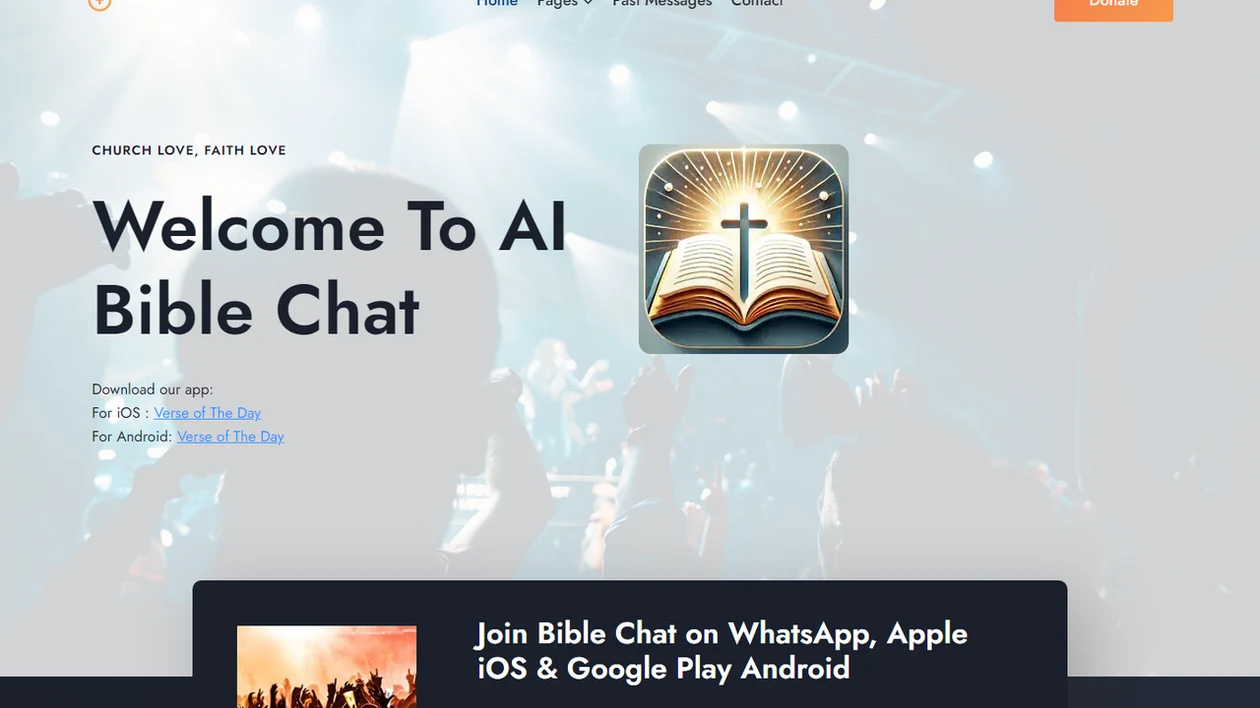
Side-by-side captures of the compared products. Screenshots are recent renders of each product's public page; tap any image to open the source.
What A Bible Understanding App Should Do For Beginners
“App to help me understand the Bible” usually means a beginner wants plain-language answers to real Scripture questions, not a stack of academic terms. A useful Bible explanation app should explain what a verse says, who is speaking, what the passage meant first, and how it fits the wider biblical story.
The core features are simple: natural-language Q&A, cited verse references, context, genre, themes, daily verses, prayer prompts, and guided devotion. If you type “Why does Jesus say this?” the answer should point back to the passage, not drift into vague encouragement.
The app should send you back to the Bible.
AIBibleChat ai bible chat app for daily verses, scripture q&a, prayer support, and christian devotion can support study and devotional prompts, but it should not function as a substitute pastor, prophet, or final doctrinal judge.
At-A-Glance Bible Explanation App Features For Beginners
A strong Bible explanation app should make the next faithful step obvious: read, ask, compare, and pray. When we test these tools, the useful ones feel calm on a crowded phone screen, even when a free trial note appears in tiny text under the download button.
| Feature type | What to look for | Why it matters |
|---|---|---|
| Must-have | Clear explanations, cited passages, multiple translations, and context | These keep the answer tied to Scripture instead of opinion. |
| Helpful | Daily verse reminders, prayer support, reading plans, and saved questions | These support a steady daily verse flow. |
| Caution | Vague answers, no references, unclear privacy policy, or overconfident doctrinal claims | These raise trust and safety concerns. |
For beginners, a checklist beats hype because it shows whether the app will actually help during reading. If you are starting from zero, our Bible chat for beginners guide covers a slower first-week path.
When comparing options, test the same verse question in AIBibleChat, YouVersion, Logos, Bible Gateway, and Blue Letter Bible so you can see which tool gives the clearest references, context, and next reading step.
How An Understand Scripture App Works Behind The Scenes
An understand Scripture app works by reading your question, identifying biblical concepts, matching them with relevant passages or themes, and generating a plain-language response. In technical terms, many AI Bible chat tools use language model processing and retrieval matching. That means the system predicts a helpful answer while pulling from Scripture-related patterns or reference material.
The basic flow is: user question, model processing, Scripture-related matching, answer generation, then user verification. Stronger apps connect answers to verse references, historical context, literary genre, and application. We often test this by copying a verse reference from Romans into a chat box, then checking the whole chapter around it.
AI can mimic careful explanation, but it does not possess spiritual discernment. For beginners, an app usually works best when it slows the question down and pushes the reader back to the passage.
How To Use A Bible Understanding App During Reading
Use a Bible understanding app during reading by starting with the passage, then asking focused questions the app can answer with context. The app is most helpful when it supports the reading moment instead of taking it over.
- Read the passage first in your Bible or Bible app before opening the chat.
- Ask a specific question such as “Who is speaking in John 15?” or “What does this word mean?”
- Request context by asking about audience, genre, setting, cross-references, or how the passage connects to Jesus.
- Compare the answer with the passage and at least one trusted translation.
- Save next steps such as a verse to reread, a question for group study, or a prayer prompt.
- Pray or reflect before turning the explanation into action.
A 7:00 a.m. lock-screen verse notification can start the habit, but the real work begins when you open the chapter.
Before You Start Using A Bible Understanding App
Before you start using a Bible understanding app, get the passage and the purpose clear. A little preparation keeps the app from answering a half-formed question with a confident but shallow summary.
- Choose a readable translation you can follow without stopping every sentence. For many beginners, that may mean using a clear modern translation alongside the version your church reads.
- Open the whole chapter before you ask about one verse. The surrounding paragraphs often show who is speaking, what problem is being addressed, and whether the line is poetry, narrative, teaching, or warning.
- Name the kind of question you are asking. Study questions, doctrine questions, prayer prompts, and crisis concerns need different levels of care and verification.
- Slow down sensitive topics such as salvation, abuse, grief, sexuality, mental health, or major decisions. Do not let a quick answer become your only counsel.
- Have a trusted person ready when the question carries weight. A pastor, church leader, small group leader, or mature believer can help you test the answer with Scripture, wisdom, and real-life care.
Step 1: Choose A Bible Explanation App With Scripture References
Does the Bible explanation app show Scripture references for its answers? If it does not, treat the response as incomplete, even when the wording sounds spiritual.
Verse references matter because they let you test the explanation against the Bible text. A good app should show the passage, explain the context, and encourage you to check the chapter before applying the answer. Apps that offer advice without references can blur the line between biblical teaching and motivational language.
We have seen this difference in ordinary use. In a grocery store parking lot before a stressful errand, a short answer with Psalm and Philippians references is easier to verify than a paragraph of religious-sounding comfort. Tools like AIBibleChat can be useful when they keep the question tied to Scripture, but the reader still needs to compare the passage before applying it.
Step 2: Ask Your Understand Scripture App Better Questions
Better questions produce better Bible explanations. Instead of asking, “What does this mean?” try “What is the context of Romans 8:28?” or “What did Jesus mean in this parable?” or “What is the genre of Revelation?”
Vague questions often get broad answers. Specific questions about context, audience, meaning, doctrine, application, and prayer give the app a narrower path. You can ask, “Who was Paul writing to?” then follow with, “How should I apply this without ignoring the original audience?”
Keep asking.
If an answer feels too neat, ask for cross-references or a simpler explanation. Small group leaders can also turn focused prompts into Wednesday night discussion, especially when using a tool that can create Bible study questions from a passage rather than a theme alone.
Step 3: Verify Bible Chat Answers Before You Apply Them
Verification protects against hallucinated references, oversimplified doctrine, and misplaced application. This matters most when the answer touches salvation, suffering, sexuality, mental health, abuse, or major life decisions.
- Re-read the full passage in context before trusting a short AI summary.
- Compare more than one trusted Bible translation, especially when a key word carries doctrinal weight.
- Check cross-references, study notes, sermons, church teaching, and mature Christian counsel.
- Treat sensitive topics as higher-risk and slower to apply.
- Watch for verse references that sound plausible but do not actually support the claim.
A cross-reference footnote underlined twice can change the whole reading. For topic-based questions, a guide like what does the Bible say can help you gather passages before asking an app for a summary.
Common Mistakes When Using A Bible Explanation App
The most common mistakes come from treating a fast answer as a finished interpretation. A Bible explanation app works best when you give it a real passage, check its references, and slow down before applying it.
- Name the passage before asking the question. “What does this mean?” is too broad if the app does not know the book, chapter, speaker, audience, or situation you are reading.
- Check the verses behind a confident answer. Smooth wording can still miss the context, cite a weak proof text, or turn a side point into the main point.
- Separate comfort from interpretation. A devotional sentence may encourage you, but encouragement is not the same as explaining what the biblical author meant.
- Slow down personal application when the issue is sensitive. Questions about marriage, abuse, grief, mental health, addiction, sexuality, or major life choices need pastoral care, trusted counsel, and sometimes professional help.
- Review privacy settings before typing prayers, doubts, names, family conflict, or church details into any app.
A good rule is simple: let the app help you study, but do not let it carry more authority than Scripture, wise counsel, and careful prayer.
Common Myths About Using A Bible Explanation App
Bible explanation apps are study aids, not infallible authorities. They can help a beginner ask better questions, but they cannot replace Scripture, prayer, or the church.
- Myth 1: AI Bible apps give infallible answers. They do not. They can summarize patterns in text, but they can still make factual or theological mistakes.
- Myth 2: Bible apps are only for advanced Christians. Many are built for beginners who need plain wording, short explanations, and guided reading.
- Myth 3: Using an app is lazy or weak faith. Digital religious learning is common, and a careful app can support disciplined study.
- Myth 4: An app can replace church, prayer, or community. It cannot. The Christian life is lived with God and people, not only on a screen.
A small group leader pasting discussion questions into a Wednesday night text thread still needs real conversation in the room.
Digital Bible Study Demand Behind Understand Scripture Apps
Digital Bible study tools meet a real need because many people already look for faith guidance on phones and computers. Pew Research Center has reported that many U.S. adults use the internet for religious or spiritual information, helping explain the demand for plain-language Bible support (https://www.pewresearch.org/religion/2014/11/06/religion-and-electronic-media/).
- Pew has also reported high smartphone ownership among religiously active U.S. adults, which makes mobile Bible study a realistic use case (https://www.pewresearch.org/religion/2014/11/06/religion-and-electronic-media/).
- Pew’s Religious Landscape Study tracks how often U.S. adults read Scripture, including weekly-or-more reading frequency (https://www.pewresearch.org/religious-landscape-study/database/frequency-of-reading-scripture/).
- Those habits create a practical need for mobile explanations during commutes, breaks, and morning reading.
- A Bible explanation app helps most when it connects digital convenience with careful Scripture reading.
- For new believers, mobile support can reduce the first barrier: not knowing what question to ask.
The break room vending machine hum is a real study setting now. That is why tools such as AIBibleChat ai bible chat app for daily verses, scripture q&a, prayer support, and christian devotion should be judged by clarity, citations, and responsible AI use.
Limitations
AI Bible tools can help with general study and devotion support, but they have real limits. Use them with discernment, especially when the question carries emotional, doctrinal, or safety weight.
- AI Bible chat can hallucinate, misquote, or cite verses inaccurately.
- AI can oversimplify complex doctrines and flatten denominational differences.
- No app replaces Scripture, the Holy Spirit, pastoral care, church community, or mature Christian counsel.
- Internet access, server outages, and subscription limits can affect availability.
- Privacy matters because spiritual questions, prayers, doubts, and family concerns may be sensitive.
- Sensitive issues such as abuse, self-harm, mental health, and crisis situations require real human help and appropriate professional or pastoral support.
- App store signals such as star ratings, screenshots, privacy labels, and in-app purchase notes deserve a careful look before download.
If danger is present, stop using the app as the main help. Contact local emergency services, a crisis line, a pastor, or a qualified professional.
FAQ
What app explains Bible verses?
Bible explanation apps and AI Bible chat tools can explain verses with context, references, and plain-language summaries. AIBibleChat is one option to compare with other Bible study and devotional apps.
Can AI help study the Bible?
AI can help with summaries, context, question prompts, and reading support. Its answers should be verified against Scripture and trusted Christian guidance.
Are Bible explanation apps accurate?
Bible explanation apps can be helpful, but accuracy depends on citations, context, theological care, and user verification. Answers without Scripture references should be treated cautiously.
What is a Scripture app?
A Scripture app is a tool for reading, searching, studying, hearing, or asking questions about the Bible. Some include chat, daily verses, reading plans, audio, and prayer features.
How do beginners understand the Bible?
Beginners should start with a readable translation, read passages in context, ask focused questions, and use trusted guidance. A study app can support that process without replacing reading.
Should Christians use AI Bible apps?
Christians may use AI Bible apps as study aids while keeping Scripture, prayer, church, and discernment central. The app should serve Bible reading, not govern faith decisions.
Can an app replace church?
No app should replace worship, community, pastoral care, sacraments or ordinances, prayer, and real relationships. Christian formation requires more than private screen time.
How do I check AI answers?
Reread the passage, compare translations, check trusted resources, and ask mature believers. Be extra careful with doctrine, suffering, sexuality, mental health, abuse, and major decisions.
Are Bible explanation apps free?
Some Bible explanation apps are free, while others use trials, subscriptions, or paid feature tiers. Check the current AIBibleChat listing or website, along with any app-store pricing notes, before relying on a free plan.